
Introduction
After childbirth, many women experience weakened pelvic floor muscles (Pelvic floor exercises for postpartum women), which can lead to issues like urinary incontinence, pelvic organ prolapse, and decreased core stability. Thankfully, targeted pelvic floor exercises for postpartum women can help restore strength, improve bladder control, and enhance overall well-being.
In this blog, we’ll explore seven effective pelvic floor exercises that are safe and beneficial for postpartum recovery.
1. Kegel Exercises
- How to do it: Contract the pelvic floor muscles (as if stopping the flow of urine), hold for 5–10 seconds, then release. Pelvic floor exercises for postpartum women.
- Benefit: Improves muscle tone and bladder control.
- Pro Tip: Perform 3 sets of 10 repetitions daily.
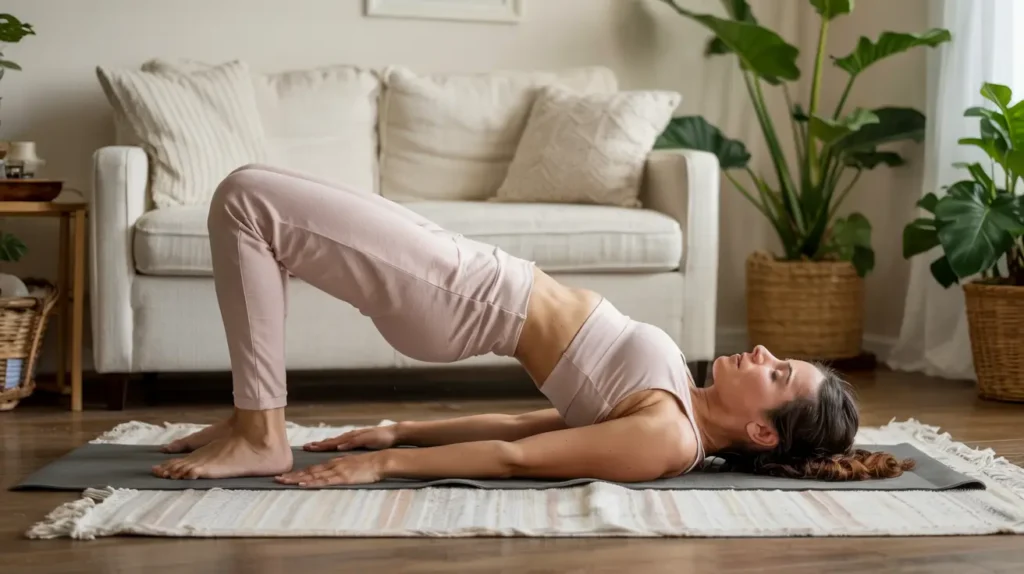
2. Bridge Pose (Setu Bandhasana)
- How to do it: Lie on your back with knees bent and feet hip-width apart. Lift your hips while engaging the pelvic floor. Pelvic floor exercises for postpartum women.
- Benefit: Strengthens glutes, lower back, and pelvic floor muscles.
- Pro Tip: Inhale as you lift, exhale as you lower your hips.
3. Pelvic Tilts
- How to do it: Lie on your back with knees bent. Flatten your back against the floor by tilting your pelvis upward.
- Benefit: Builds core stability and strengthens pelvic muscles.
- Pro Tip: Perform 10–15 reps, twice a day.
4. Happy Baby Pose (Ananda Balasana)
- How to do it: Lie on your back, bend your knees, and hold the outsides of your feet with your hands. Pelvic floor exercises for postpartum women.
- Benefit: Relaxes pelvic muscles, reduces tension, and gently stretches the lower back.
- Pro Tip: Breathe deeply and hold for 30 seconds.
5. Deep Belly Breathing
- How to do it: Inhale deeply into your belly while engaging your pelvic floor; exhale and release slowly.
- Benefit: Enhances diaphragmatic breathing and supports pelvic muscle coordination.
- Pro Tip: Practice for 5 minutes daily, especially during relaxation time.
6. Bird Dog Exercise
- How to do it: Get on hands and knees. Extend one arm and the opposite leg, hold briefly, then switch sides. Pelvic floor exercises for postpartum women.
- Benefit: Improves core strength, posture, and pelvic floor engagement.
- Pro Tip: Keep your hips level and engage your core.
7. Squats with Pelvic Engagement
- How to do it: Stand with feet hip-width apart. Lower into a squat while engaging the pelvic floor, then rise. Pelvic floor exercises for postpartum women.
- Benefit: Activates glutes and strengthens pelvic and thigh muscles.
- Pro Tip: Maintain proper posture and alignment throughout the move.
FAQs
1. Why are pelvic floor exercises important after childbirth?
They help rebuild muscle strength, reduce incontinence, and support organs like the bladder and uterus.
2. When should I start pelvic floor exercises postpartum?
You can begin gentle exercises like Kegels a few days after a normal delivery. Consult your doctor if you had a C-section or complications.
3. How often should I do pelvic floor exercises?
Aim for daily sessions, ideally 2–3 times a day, for optimal recovery.
4. Can pelvic floor exercises help with back pain?
Yes. Strong pelvic muscles support the lower back and improve posture.
5. Are these exercises safe if I’m breastfeeding?
Absolutely. These low-impact moves are safe and beneficial during breastfeeding.
Conclusion
Regaining strength after childbirth is a journey, and pelvic floor exercises for postpartum women are a vital part of that process. From Kegels to squats and yoga-inspired movements, these exercises offer a natural, effective way to rebuild strength, improve bladder control, and boost confidence.
Incorporate these exercises into your daily routine, and you’ll feel stronger, healthier, and more in control in no time. Always remember, your postpartum recovery is not just about bouncing back—it’s about healing, nurturing, and honoring your body’s journey.

